Pilkington Prize 2026
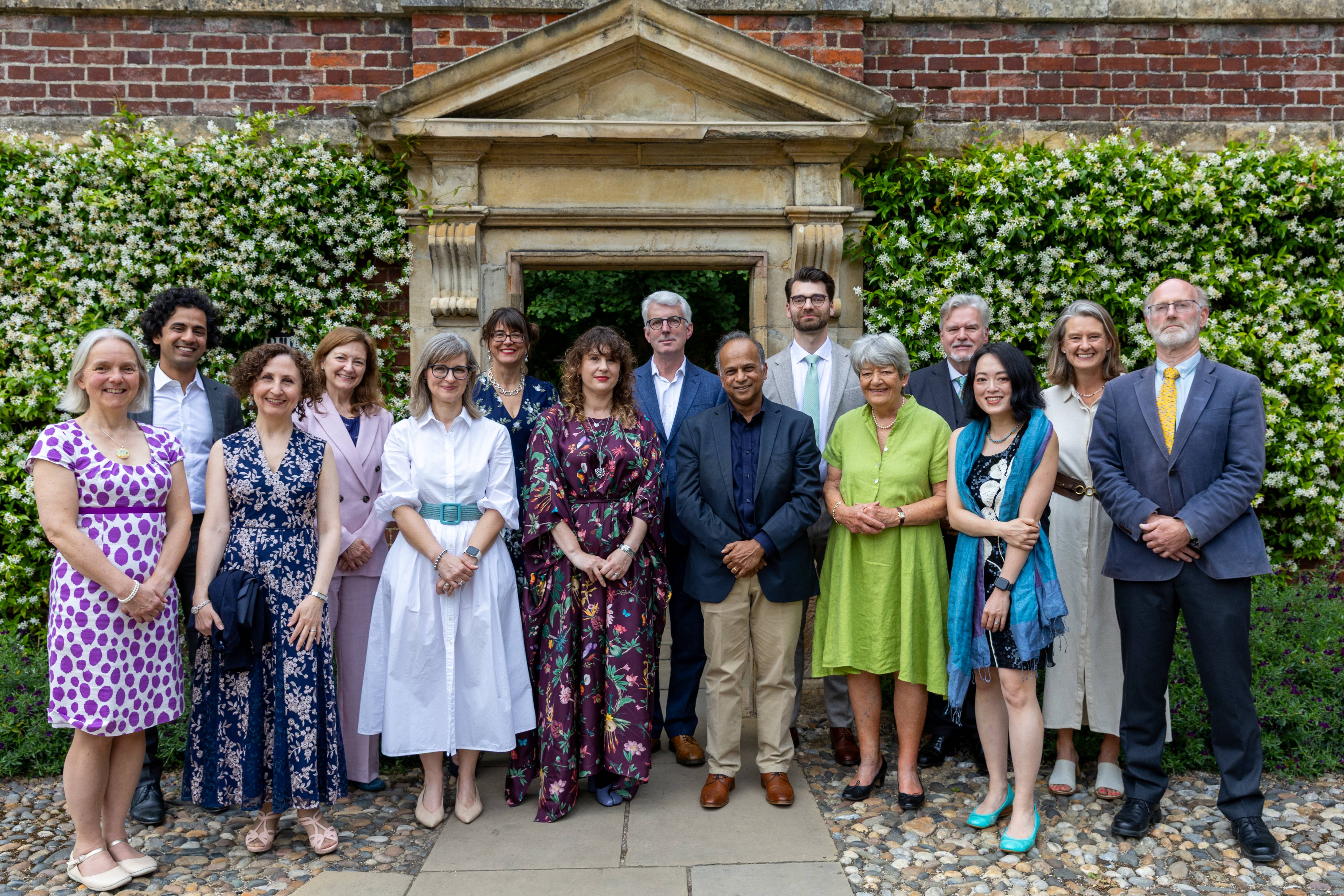
Congratulations to this year's Prize Winners! We were delighted to welcome our winners to a celebration at St Catharine's College on Tuesday 16 June.
- Prof. Julian Allwood
- Dr Monique Boddington
- Prof. Nicholas Butterfield
- Prof. John Carr
- Dr Fiona Cooke
- Prof. Orietta Da Rold
- Dr Oleg Kitov
- Dr Rachel Leow
- Prof. María Noriega- Sánchez
- Prof. Dhruv Ranganathan
- Miss Klaud Simpson
- Prof. Edgar Turner
Prof. Julian Allwood
Department of Engineering・St Catharine's College

For 25 years, Prof. Julian Allwood has delivered a high teaching load with clarity and humour, initially in Manufacturing and the MBA, and subsequently Civil & Environmental Engineering.
During lockdown, Julian completely reinvented the IA Structures course, blending instructional videos with interactive exercises and entertaining application studies. He continues to offer hybrid delivery, although his in-person lectures are very popular. Out of his research and impact, he proposed, created and continues to deliver a new IIB / Master’s course on Climate Mitigation, attracting high numbers. The course uses flipped lectures, in-person updates and discussion, mid-term coursework with feedback, and a final essay. Following careful research, in 2025 Julian embraced informed use of ChatGPT as a ‘legitimate but untrustworthy’ source for students preparing their essays.
On the postgraduate side, Julian has created a groundbreaking course for the Future Infrastructure & Built Environment MRes, supporting students in collaborative research and leading to an industry-facing report and a Nature series journal paper.
More broadly, he runs a 16-hour writing class for PhD students in Environmental Engineering, created a public course on Climate Mitigation, and led a national outreach project for primary pupils. Julian is always highly ranked by students and was runner-up for ‘Lecturer of the Year’ in the 2024 Student-Led Teaching Awards.
Dr Monique Boddington
Judge Business School

Dr Monique Boddington has made outstanding and transformative contributions to pedagogy at Cambridge Judge Business School. She has consistently delivered exceptional teaching across programmes, reflected in excellent student evaluations. Her courses combine the latest research with sociological and philosophical theories and are marked by pedagogical innovation. Monique has expanded the use of international case studies and technology in teaching, notably introducing a virtual reality (VR) case study set in the global south that provides an immersive, context-rich learning experience.
Students widely praise her teaching for its interactive and engaging style, balancing theory and practice while translating complex ideas into real-world applications. They also commend her strong communication skills, insightful examples, and ability to create an inclusive environment that encourages open discussion and diverse perspectives.
Since the launch of the Master of Entrepreneurship programme in 2018, Monique has played a central role in its growth and development. Appointed Deputy Director in 2021 and Director in 2024, she led a major restructuring to better support part-time students and neurodiverse learners through improved course balance and accessible assessment methods. Under her leadership, the programme has expanded significantly and strengthened its reputation for innovation in entrepreneurship education.
Prof. Nicholas Butterfield
Department of Earth Sciences・Selwyn College

Prof. Nicholas Butterfield is an outstanding and dedicated educator who has spent an entire career delivering world-class teaching in the lecture theatre, at College, in the laboratory and in the field. He has been a pivotal contributor to the Earth Sciences teaching programme since he came to Cambridge in 1995 and is one of the most well-regarded lecturers in the department’s history. His style has brought a more process-driven and cross-disciplinary approach to the course, and he never tires of refreshing his material and seeking out the most captivating museum specimens.
Nick served as Director of Teaching from 2018 to 2021, leading several important developments. He drove the move to lengthen Part III projects to facilitate the collection and interpretation of research-level data, coordinated the introduction of the MASt in a bid to offer the Cambridge Part III experience to BSc students from other universities, and led the department’s reintroduction of in-person teaching following lockdown to ensure students received hands-on experiences with specimens.
Nick is one of those rare staff members who is always able to find the bandwidth to do more, be it leading a field trip, hosting an open day, running a masterclass or conducting a major course revision.
Prof. John Carr
Department of Plant Sciences・Corpus Christi College

Prof. John Carr has made an exceptional, sustained contribution to teaching, practical training and public engagement in Plant Sciences over his 30-year+ career as a University Teacher Officer. Students consistently praise his lectures for their clarity and enthusiasm. He is known for an unusual ability to make complex concepts accessible. His innovative approach to practical teaching – most notably the design and delivery of the five-week thematic practical in Part IB Plant & Microbial Sciences – has set a benchmark for hands-on scientific training and provides vital preparation for students progressing to Part II research projects.
John’s commitment to student learning extends far beyond the lecture theatre. He routinely supervises a heavier-than-average load of undergraduate research projects and essays and supports a wide range of College teaching. Equally impressive is his longstanding dedication to widening participation and public understanding of science. Through innovative laboratory ‘taster’ workshops and international training programmes, as well as talks and interactive exhibits for schools and public audiences, he has opened pathways into science for learners from diverse backgrounds. John’s ability to make plant science vivid, relevant and inspiring marks him as an outstanding educator and ambassador for our field.
Dr Fiona Cooke
School of Clinical Medicine・Girton College
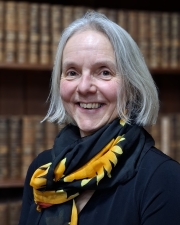
For over two decades, Dr Fiona Cooke has made an exceptional and sustained contribution to medical education and student welfare across the University and Clinical School. As a Girton College lecturer for 20 years, Fiona has provided outstanding teaching and mentorship. She has supported students across multiple Colleges, delivered outreach to sixth-formers, and co-founded the Girton Hammond Science Communication Prize, now celebrating its 18th year. Through initiatives such as the Girton Study Skills Seminar on reading scientific papers, she has consistently promoted both intellectual growth and professional development.
At the broader undergraduate level, Fiona regularly hosts Part II Pathology projects, with many of her students presenting their work nationally. In the Clinical School, she delivers the infection components of four clinic-pathological conferences, hosts students in Microbiology during Infectious Diseases weeks, and provides remediation teaching for Year 5 students who are retaking summative assessments (Final MB II). Student feedback consistently praises the quality of her teaching.
Fiona is also a senior member of the Clinical School’s Deanery Team, where she leads the student welfare programme. She has introduced and streamlined key processes such as file notes, intermission and the annual welfare plan, as well as contributing to wider curriculum review. Finally, Fiona makes substantial contributions to Final MB assessments in the Clinical School through question development, standard setting and marking.
Prof. Orietta Da Rold
Faculty of English・St John's College
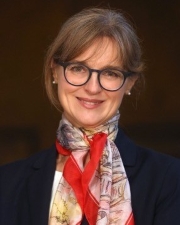
Prof. Orietta Da Rold is an inspirational teacher whose visionary approach to teaching has had a transformative effect felt far beyond the University and international in its impact. What makes Orietta’s achievement so remarkable is its sustained and cumulative scale. She transformed student access to the University Library’s medieval collections, pioneering hands-on classes that have shaped a new generation of manuscript scholars at both undergraduate and postgraduate level, fostering confidence and independence through close engagement with extraordinary material collections.
Moreover, her innovations reach a global audience. Her ‘Manuscripts Lab’ enables students to publish the research arising from their work with collections in an open-access format. This showcases the powerful connection between research and teaching and makes insights into our collections available worldwide. Similarly, as a lead academic on ‘Digging Deeper’ – a free course taken by over 10,000 learners across 124 countries – she opened access to the study of medieval book culture to a diverse community.
Alongside this innovation lies a deep, enduring commitment to her students on a daily basis: rigour, fairness and kindness define her teaching. Tireless in support of their intellectual and personal development, Orietta is exceptional.
Dr Oleg Kitov
Faculty of Economics・Selwyn College

Dr Oleg Kitov is a pioneer of innovative, student-centred pedagogy. He has transformed the teaching of quantitative Economics papers with an award-winning, evidence-based framework centred on retrieval practice and sustainable feedback. Scaled across a dozen problem-based papers and embraced within the faculty and Colleges, his approach delivers demonstrable gains – higher attainment, deeper conceptual understanding and stronger intrinsic motivation – while keeping demanding material engaging and accessible.
With a portfolio comprising a record twelve papers, Oleg is a driving force as lecturer and supervisor. Year after year, he receives the faculty’s highest satisfaction rating – frequently 100% across multiple papers – with students praising crystal-clear explanations, meticulously engineered learning ecosystems and exemplary care. Alumni attest to lasting gains in critical thinking, self-regulation and evaluative judgement, demonstrating impact that extends well beyond Cambridge.
Oleg’s exceptional pedagogy is recognised from student-led to global arenas: the Student-Led Teaching Awards, the Teaching & Learning Innovation Fund, the Technology-Enabled Learning Prize, and the QS Reimagine Education Award, alongside numerous shortlists for teaching excellence and innovation prizes. Beyond the classroom, he shapes institutional culture by mentoring early-career lecturers and steering University- and UK-wide reforms to admissions and access, expanding outreach and fundraising for studentships.
Through evidence-led innovation and genuine care for students, Oleg demonstrates how reflective, empathetic teaching produces transformative and enduring institutional change.
Dr Rachel Leow
Faculty of History
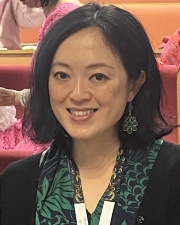
Since her appointment in 2013, Dr Rachel Leow has consistently worked to widen the provision of the study of East and Southeast Asian history in the Faculty of History’s teaching programme, in innovative and inclusive ways.
Rachel’s Special Subject ‘Sources of East Asian Modernity: China and the Chinese overseas, 1890s-1930s’ brought topics on migration, race, modernity and transnational approaches to the history of East Asia to the history curriculum for the first time. Her classroom sought to offer a respectful space for students to work through difficult contemporary questions about race, for instance discussing discriminatory anti-immigrant legislation. Oversubscribed every year, classes incorporated a range of pedagogical experiences from digital tools for annotation to enrichment experiences which helped bring the past to life for students.
For our new Tripos, Rachel played a key role in designing and developing one of the main papers for first-years, and received glowing feedback on her supervision of student research projects for a new second-year paper. She has helped to foster a pedagogical culture open to technological innovation in the faculty, with particular attention to the challenges posed by AI, and her research-led teaching on histories of Chinese migration and transnational Asian connectivities featuring film and digital visualization has garnered an international reputation, as evidenced by demand in faculties of history and social science well beyond Cambridge.
Prof. María Noriega- Sánchez
Faculty of Modern & Medieval Languages & Linguistics・Sidney Sussex College
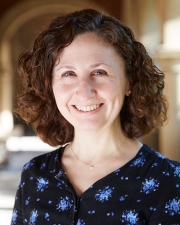
Since her appointment in 2008, Prof. María Noriega-Sánchez has been at the forefront of innovations in language teaching within the Faculty of Modern and Medieval Languages and Linguistics, transforming the pedagogical organisation and delivery of Spanish language provision across the entire Tripos. She has made an extraordinary impact on curriculum design and assessment diversification.
María’s meticulously designed classes seamlessly integrate technology-based tools with sound pedagogical principles, encouraging students to engage deeply with both language and culture. Her student-centred inclusive approach and emphasis on collaborative learning enrich the classroom experience and foster a vibrant community beyond its walls. Her tireless dedication shines through in the consistently glowing feedback from students, who describe her as both an inspiration and a fantastic educator.
An invaluable mentor to new teachers and graduates, María is also a devoted Director of Studies at Sidney Sussex with a profound commitment to student wellbeing. She undertakes wide-ranging outreach work, and her initiatives—such as tandem programmes with universities in Ecuador and Spain—expand learning into global contexts, enhancing students’ motivation and linguistic competence. Her teaching excellence is informed by a distinguished publication record in language pedagogy and translation, including pioneering textbooks used worldwide. Colleagues praise María as an exceptional and generous pedagogue, a gifted and widely beloved teacher whose outstanding contributions have profoundly reshaped language teaching at Cambridge.
Prof. Dhruv Ranganathan
Department of Pure Mathematics & Mathematical Statistics・St John's College
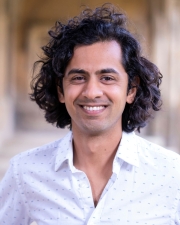
Prof. Dhruv Ranganathan is the Director of the Faculty of Mathematics’ hugely ambitious and expanded Summer Research in Mathematics (SRIM) and Cambridge Mathematics Placements (CMP) programmes, which together represent a major new strand to our undergraduate degree, involving up to 90 students annually.
The SRIM programme gives participating students their first taste of research, their first time publicly presenting their work, and often their first experience working collaboratively. The CMP programme is unique worldwide: it lets undergraduate students have impact on real-world problems across a range of industries and other academic disciplines by importing their specific mathematical expertise.
Dhruv has been critical in crystallising and growing the programme intellectually, administratively and financially. He rationalised the advertisement and subscription process for projects, helping incorporate widening participation and equity goals in both processes, he initiated group projects, he has taken a leading and highly successful role in fundraising for the programme, he conceived of and implemented the numerous summer activities which bind the cohort, and he organises the presentation days which are the annual culmination of the programme.
He is also, finally, an exceptionally gifted teacher in his own right, highly praised by both staff – winning the Faculty Lecturing Prize in 2025 - and students.
Miss Klaud Simpson
School of Clinical Medicine

Klaud Simpson has been the major driving force behind clinical practical skills training for Cambridge medical students for more than two decades. It was no surprise therefore when she was appointed to the post of Clinical Skills Unit Manager, and the unit has gone from strength to strength under her leadership.
Klaud and her colleagues provide robust practical skills training that is challenging, but which is delivered in a supportive environment and with an abundance of formative feedback. Despite her additional duties and responsibilities as unit manager, she remains totally committed to the delivery of high-quality teaching, as evidenced by the sustained positive feedback from her students. In particular, she goes out of her way to support students who are struggling to achieve the necessary competences and/or have failed a summative assessment.
Klaud is also an innovator and has the enthusiasm and skills to take others with her. For example, she designed and successfully implemented a series of new practical skills stations for inclusion in our Final MB exam programme – which have been highly commended by our external examiners. In summary, Klaud is regarded by students and colleagues alike as an outstanding teacher who contributes to high-quality teaching and learning support and who leads by example.
Prof. Edgar Turner
Department of Zoology・Clare College

Prof. Ed Turner is an outstanding educator – and curator at the Museum of Zoology – dedicated to sharing his passion for the natural world with people of all ages and backgrounds.
Ed has been instrumental in transforming University teaching in Ecology and Conservation through strategic planning, his inspirational lectures and co-designing new content for the Natural Sciences Tripos. Since becoming Deputy Head of Department for Teaching in 2023, Ed has improved department systems for collecting feedback from students, contributed constructively to the NST IB curriculum review and led the process for completely rethinking our offer at Part II. His field course teaching is exceptional: the Part II ‘Tropical Field Course in Borneo’ that he developed from scratch has been described as a life-changingly positive experience by students and academics alike.
Ed has also been innovative in widening the diversity of applicants to the University in his role as Tutor for Access & Outreach at Clare College. He co-developed a new residential course where Year 12 students from historically under-represented backgrounds co-curate real museum exhibitions, which has directly led to successful Cambridge applications. Ed has also established new connections with Fenland primary schools, teaching pupils about the natural world and its conservation, and introducing the museum to families that had never previously engaged with the University.